The Psychology of the Click (CTR Optimization)
In the highly saturated digital landscape of 2026, your website's content is only as good as its packaging. When your link appears on a Google Search Engine Results Page (SERP) or is shared in a crowded Slack channel, you have exactly 1.5 seconds to capture the user's attention. This micro-interaction is entirely governed by your SEO Meta Tags and Open Graph data.
Think of your Meta Title and Description as your digital billboard. If your title is truncated (cut off) because it exceeds pixel limits, or your description is a boring, auto-generated excerpt, the user's brain subconsciously registers your brand as 'low effort' or 'unprofessional'. Conversely, a perfectly crafted title paired with a compelling call-to-action in the description drastically increases your Click-Through Rate (CTR).
Our Advanced SEO Meta Tag Generator removes the guesswork from this critical process. By providing a pixel-perfect, real-time visual preview of how your tags will render across Google, Twitter, and Facebook, you can mathematically engineer your copy to maximize human curiosity and drive massive organic traffic to your landing pages.
Why Open Graph (OG) Tags are Non-Negotiable
Originally developed by Facebook, the Open Graph (OG) protocol has become the universal standard for social media link sharing. Platforms like LinkedIn, Twitter (X), Discord, and iMessage all rely on Open Graph meta tags to transform a raw, ugly URL into a rich, interactive card.
If you fail to define your og:title, og:description, and most importantly, your og:image, these platforms will deploy scraper bots to 'guess' what your page is about. They will often grab your navigation logo, a random background texture, or the first sentence of your footer. The result is a broken, embarrassing preview card that destroys user trust.
By utilizing our generator, you take absolute control of your digital narrative. You can explicitly define a high-resolution, custom-designed cover image for your links. In an era where visual communication dominates, your Open Graph image is often the very first interaction a potential customer has with your brand. Do not leave it to chance.
Surviving Zero-Click Searches with Rich Data
The SEO industry is undergoing a massive paradigm shift. As discussed in our comprehensive guide on Generative Engine Optimization (GEO), traditional search behavior is being replaced by AI Answer Engines like Perplexity and Google SGE. These Large Language Models (LLMs) prioritize websites that offer highly structured, easily parsable semantic data.
Your meta tags are the absolute foundation of this semantic structure. When an AI bot crawls your page, the very first things it analyzes are your <title> and <meta name="description"> tags to establish context. If these tags are missing, contradictory, or stuffed with spam keywords, the LLM will assign a low confidence score to your data and refuse to cite you as a source. Our tool ensures your meta data is generated with strict, clean syntax, making your website effortlessly readable for both human users and advanced AI scraping algorithms.
Next.js 14 Metadata: The Modern Developer Workflow
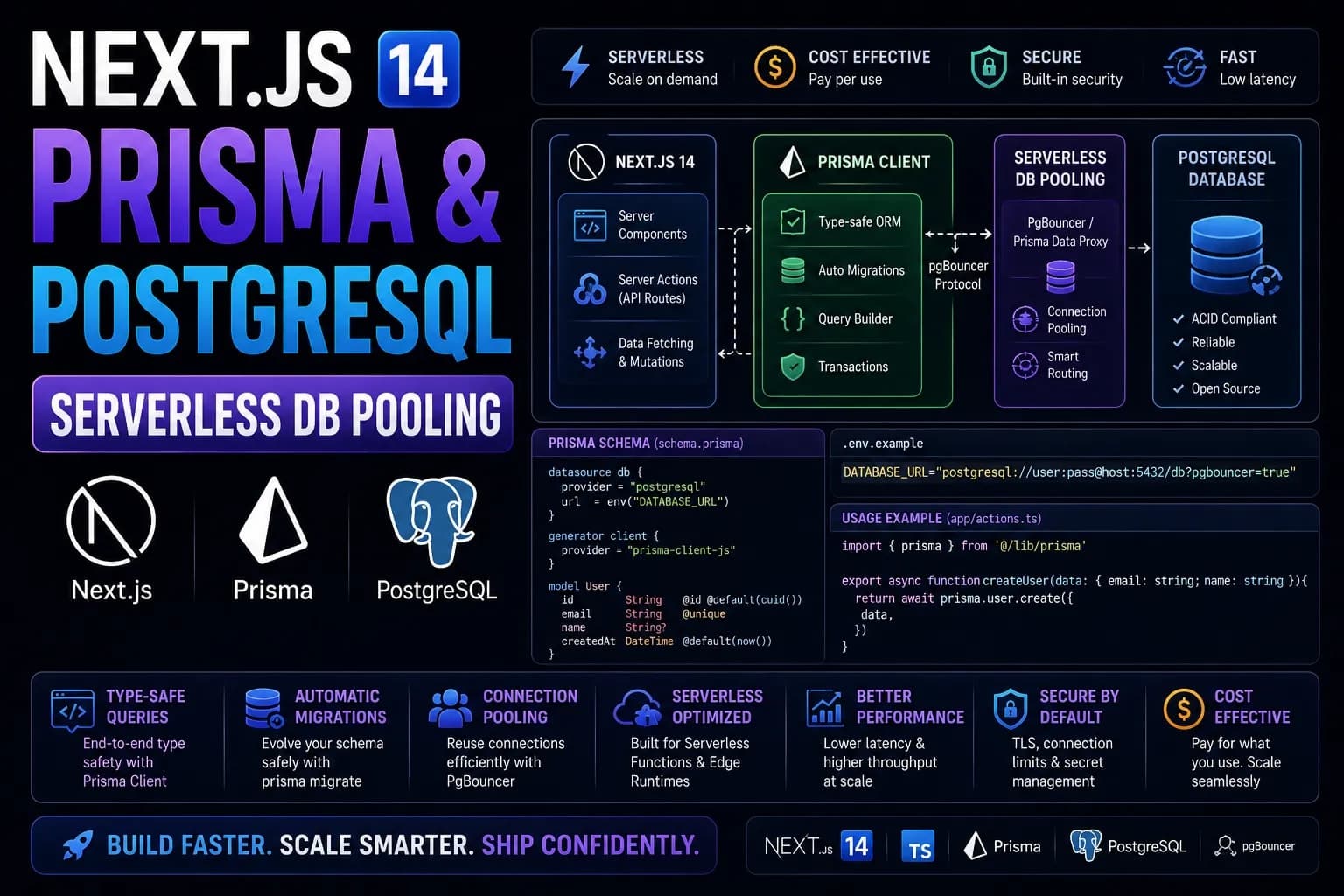
For software engineers, manually typing out repetitive HTML <meta> tags is a tedious waste of development time. Furthermore, if you are building applications using the modern Next.js 14 App Router, standard HTML tags inside the <head> are an anti-pattern. Next.js relies on a specialized, strongly-typed Metadata object exported from your layout.tsx or page.tsx files.
We engineered this tool specifically to accelerate the modern developer workflow. With a single click, our generator translates your visual inputs into a perfectly formatted, copy-pasteable Next.js 14 Metadata object. This eliminates syntax errors and guarantees type safety.
For developers who require even stricter type definitions for their backend schemas, we highly recommend running your API responses through our JSON to TS Converter. Combining strict backend typing with our automated frontend metadata generation ensures a bulletproof, enterprise-grade Next.js architecture.
The Golden Rules of Meta & Media Architecture
To dominate search engine rankings and social media feeds, you must adhere to strict architectural guidelines. Search engines measure length in pixels, not just characters, but these general limits will keep your content safe:
- Title Tags: Keep your title between 50-60 characters. Anything longer will be replaced by an ellipsis (...) on Google.
- Meta Descriptions: Aim for 150-160 characters. Treat this space as premium ad copy. Include a clear value proposition and a Call to Action (CTA).
- Open Graph Images: Your social sharing image should be exactly 1200x630 pixels (a 1.91:1 ratio). This guarantees it will look perfect on Facebook, LinkedIn, and Twitter Large Cards without cropping.
Crucial Performance Tip: Do not use massive 5MB PNG files for your Open Graph images. Social media bots will time out and fail to load them. Always compress your OG images using an Image to WebP Optimizer before uploading them to your server. Fast-loading media ensures your preview cards render instantaneously across all platforms.
Client-Side Privacy & UI Design
As a developer or digital marketer, you are often working with unreleased product URLs, secret promotional copy, or embargoed brand assets. You cannot risk typing this sensitive data into a shady online tool that stores your inputs on a remote server.
Our SEO Meta Tag Generator is built with a 100% Client-Side architecture. Every keystroke, every preview calculation, and every line of generated code is processed locally within your browser's RAM. We have zero backend databases connected to this tool. Your proprietary marketing data remains completely private and secure.
Finally, we believe that professional tools should inspire great design. The interface of this generator was constructed using advanced layout principles. If you want to replicate this clean, highly-organized aesthetic for your own SaaS dashboards, you can use our Tailwind Bento Grid Builder to visually engineer your layouts. Great SEO and great UI are two sides of the same coin.